 Pro
Pro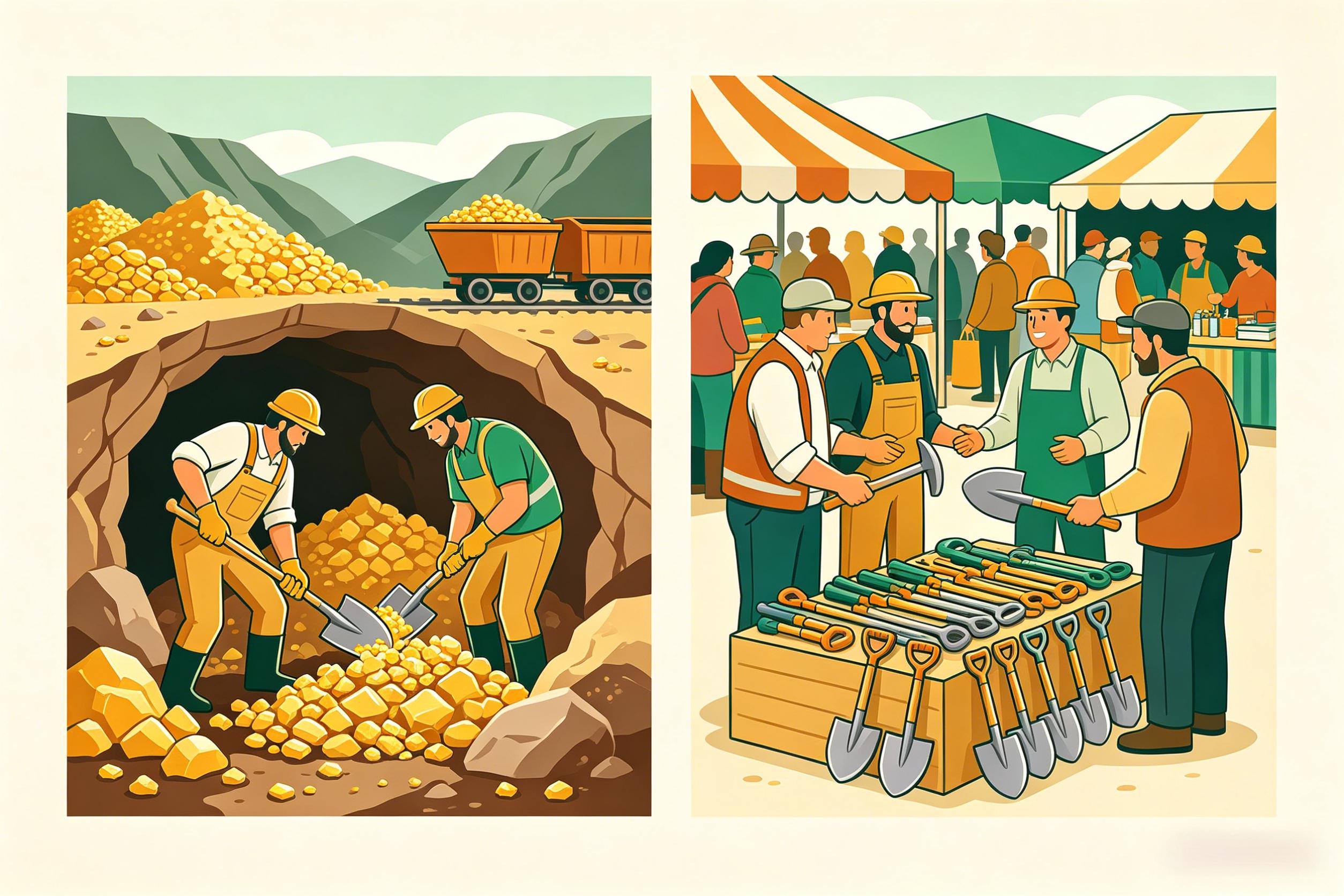
During the California Gold Rush of 1849, thousands of prospectors flooded the hills hoping to strike it rich. But most didn't find gold. Who actually made fortunes? The merchants who sold them shovels, pickaxes, and supplies. This principle—"sell the shovels, not the gold"—remains one of the most reliable business models in history.
The Psychology Behind Selling Dreams
Human beings have an insatiable desire to improve their financial situation. It's one of our most fundamental drives. And this desire makes selling tools, services, and courses about making money extraordinarily profitable.
Here's why: when someone buys a shovel to dig for gold, they're not really buying a shovel. They're buying a dream. They're buying the possibility that this tool will be the key to their fortune. And dreams are worth infinitely more than the physical objects that represent them.
Key Insight
You're not selling a shovel. You're selling access to a gold mine. The shovel itself might be worthless, but the dream of striking gold makes it priceless. Understand this psychological principle, and you'll understand why selling tools to aspiring entrepreneurs is more profitable than trying to get rich yourself.
Modern Examples of "Selling Shovels"
AI Tools: The New Gold Rush
AI is the hottest topic in technology. Everyone wants to use AI to make money—automate their business, create content faster, build new products. But here's the truth: using AI to make money is hard. Very few people actually succeed.
But teaching others how to use AI? That's a goldmine. Consider:
- AI course creators - Courses teaching people how to use ChatGPT, Midjourney, and other AI tools generate millions in revenue
- AI tool developers - Developers who build tools around AI platforms (Chrome extensions, templates, workflows) often earn more than those trying to use AI directly
- AI consultants - Businesses pay premium prices for experts who can implement AI solutions
- AI prompt marketplaces - Selling pre-made prompts for various AI tools has become a lucrative niche
The people making money from AI aren't necessarily the ones using AI to create products. They're the ones selling the tools, training, and knowledge to everyone who wants to get rich with AI.
The "Make Money Online" Course Industry
Some of the most successful online entrepreneurs aren't making money through the businesses they teach about—they're making money by teaching others how to make money. The "make money online" niche is worth billions of dollars.
Successful practitioners of this model include:
- Creators who sell courses on freelancing, e-commerce, or affiliate marketing
- Coaches who offer one-on-one mentorship programs
- YouTubers who build massive audiences around "passive income" content
- Authors who write best-selling books about wealth building
The irony is rich: many of these instructors haven't achieved the wealth they promise to teach others. But their customers don't care. They're buying the dream.
Web3 and Cryptocurrency
During the crypto boom, while traders tried to pick winning tokens, the real money was made by:
- Exchange platforms - Coinbase, Binance made billions from transaction fees
- Wallet providers - Companies selling crypto wallets captured enormous value
- NFT marketplaces - OpenSea and similar platforms thrived while traders came and went
- Blockchain infrastructure - Companies building the "rails" for crypto transactions
The dream of crypto wealth drove millions to these platforms. Whether or not those dreamers got rich, the platform owners certainly did.
The Domain Name Gold Rush
In the early days of the internet, savvy entrepreneurs bought up valuable domain names. While most domains sat idle, the real money was made by:
- Domain registrars - Companies like GoDaddy built empires selling domains
- Domain brokers - Agents who help people buy and sell premium domains
- Website builders - Wix, Squarespace, WordPress themes
- Web hosting companies - The infrastructure that powers every website
These companies don't need their customers to succeed. They just need customers to dream of succeeding.
E-commerce Infrastructure
While millions try to build successful e-commerce stores, the real winners are:
- Shopify - The platform powering countless online stores
- Print-on-demand services - Printful, Printify profit from sellers
- Shipping and fulfillment companies - The logistics backbone of e-commerce
- E-commerce tools and apps - Reviews apps, email marketing tools, analytics services
Why "Selling Shovels" Always Works
1. Humans Always Want to Get Rich
The desire to improve one's financial situation is one of humanity's most fundamental drives. It transcends economic conditions, cultural backgrounds, and time periods. People always want to believe there's a better opportunity just around the corner.
2. The Dream Amplifies Value
A $50 course on making money is worth far more than $50 in the customer's mind. Why? Because they're not buying information—they're buying the possibility of wealth. The dream multiplies the perceived value of every tool and service.
3. Lower Risk for the Seller
When you sell shovels, you don't need to find gold. You just need to sell to people who think they might. Your success doesn't depend on market timing, luck, or the success of your customers.
4. Recurring Revenue Potential
Many "shovel sellers" benefit from recurring revenue models. SaaS tools charge monthly fees. Course creators add new content to keep customers paying. Coaches upsell to premium programs. The business can scale without needing each customer to succeed.
5. Infinite Market Size
As long as there are people who want to improve their financial situation, there will be a market for tools and services that promise to help. And that market will never fully saturate because the dream never dies.
The Art of Selling Dreams Responsibly
While the "selling shovels" model is highly profitable, ethical considerations matter. The best practitioners in this space:
- Provide genuine value - While selling dreams, they also deliver useful tools and knowledge
- Set realistic expectations - They don't promise overnight riches (or if they do, they deliver enough value to justify the purchase)
- Focus on helping customers succeed - Their success is tied to customer success, creating alignment
- Build sustainable businesses - They create products and services that genuinely solve problems
How to Apply This Model
1. Identify the Gold Rush
What are people currently excited about? What dream are they chasing? Today it's AI and crypto. Yesterday it was e-commerce and social media marketing. Tomorrow it will be something else. Be the one who sells the shovels.
2. Build Tools, Not Just Dreams
The best "shovel sellers" actually provide value. Don't just sell empty promises. Create tools, courses, and services that genuinely help people, even if they don't all strike gold.
3. Position Yourself as an Expert
You don't need to have personally struck it rich. You need to understand the dreams, fears, and aspirations of your target market. Share knowledge, build an audience, and establish credibility.
4. Price Based on Dreams, Not Costs
A course on making $100,000 shouldn't be priced based on how long it took to create. It should be priced based on the value customers perceive—their dream of earning $100,000. Price accordingly.
5. Focus on Scale
Your profit shouldn't depend on whether any individual customer succeeds. Create products that can be sold to thousands of people without additional effort. That's the leverage that makes this model so profitable.
The Bottom Line
The shovel itself is worthless. The dream makes it priceless. Every person chasing wealth is a potential customer for someone who sells the tools, knowledge, and services they believe will help them succeed.
This isn't about being cynical or exploitative. It's about understanding human psychology and building a sustainable business model. The best "shovel sellers" genuinely help people while also building successful businesses.
In every gold rush, the merchants prosper. Be the merchant, not the prospector. You'll sleep better, make more money, and have a business that doesn't depend on luck.
Ready to build your own "shovel" business? Take our free Earning Path Quiz to discover opportunities that align with your skills.