
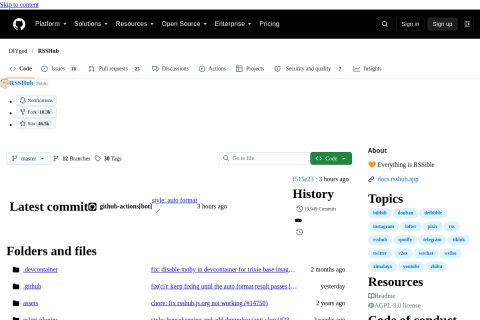
RSSHub generates RSS feeds for sites that never had them — Weibo, Bilibili, Zhihu, YouTube, Telegram and thousands more. Started in April 2018 by Chinese developer DIYgod, it now powers more than 5,000 public instances, has passed 46,000 GitHub stars, and has never taken outside funding.
What it does
RSSHub is a route-based feed generator. Every source gets a path — a Weibo user, a Bilibili channel, a Telegram channel, a university notice board — and that path returns a normal RSS feed that any reader can subscribe to. What used to require a scraper per site became a community catalogue of thousands of routes.
It was created on 2 April 2018 and is still authored and maintained by DIYgod with help from more than 1,400 contributors from 10,300 forks. The project describes itself plainly as the world's largest RSS network, and it is the reason RSS still works for platforms that spent a decade removing it.
Why it spread
The gap was created by somebody else's decision. As Chinese platforms closed their feeds, they left a large, motivated audience with no legal, convenient way to follow the sites they already used. Rebuilding that door for thousands of sources is infrastructure work, not a feature.
The architecture made strangers useful. One route lives in one file with a simple convention, so a newcomer can contribute an entire site in an afternoon — that is how a solo project accumulated more than 1,400 contributors. Self-hosting and open documentation also mean no single party can switch it off.
Distribution came from consistency rather than marketing: a public blog, an active X and Telegram presence, companion tools like RSSHub Radar, and years of steady, boring shipping.
RSSHub became a layer other products build on — readers, browser extensions and newer AI feed tools all sit on top of it. Distribution came from consistency rather than marketing: a public blog, an active X and Telegram presence, companion tools like RSSHub Radar, and years of steady, boring shipping.
Estimates, not audited figures · Last updated: 2026-10-15
Related profiles

REA
It does not decompile for you. It hands your agent the tools and demands the evidence.

Paseo
Everyone built a coding agent. He built the cockpit for all of them.
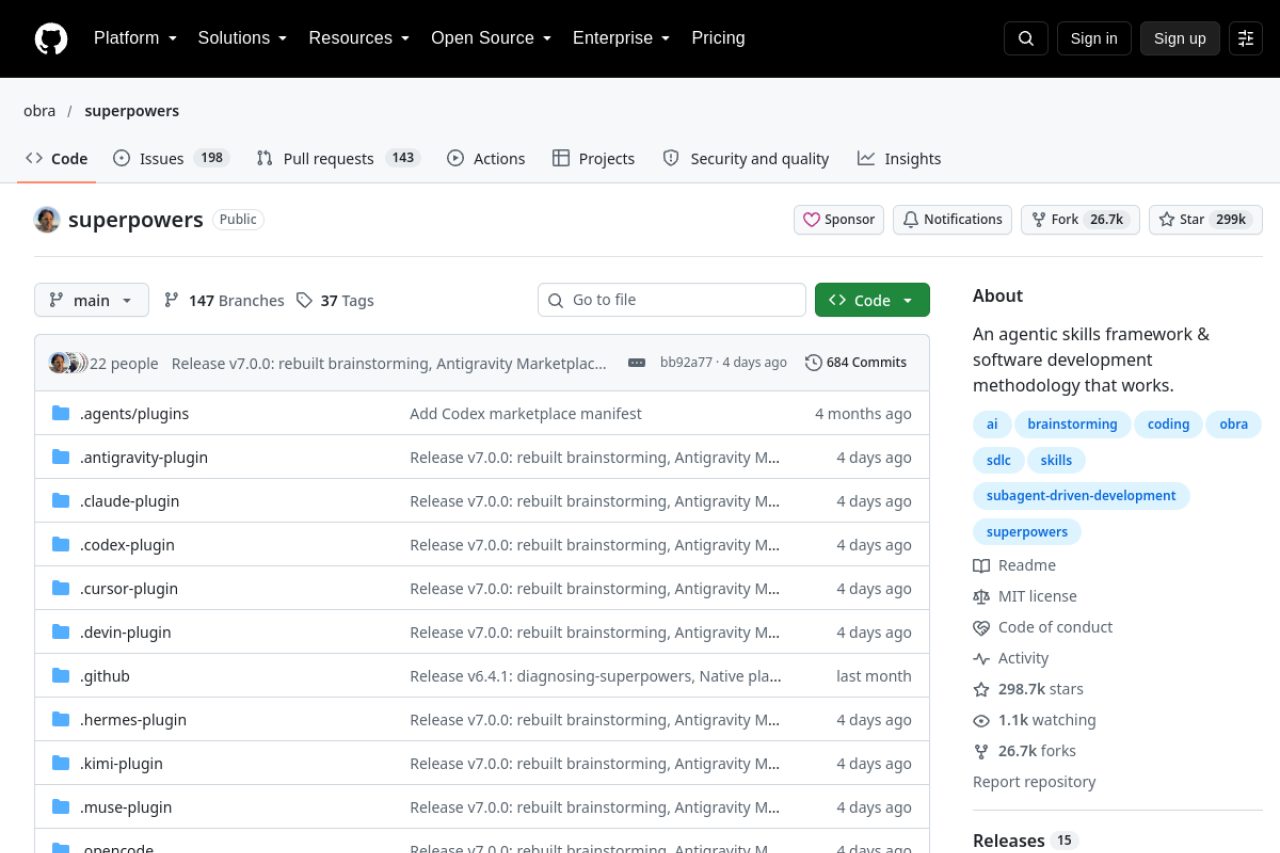
Superpowers
The most popular AI coding tool of 2026 is not software. It is a methodology.
Keep exploring
110 profiles and counting — let fate pick the next one.
Frequently asked questions
Who maintains RSSHub?
It was created by Chinese developer DIYgod in April 2018 and is still authored and maintained by him with help from more than 1,400 contributors.
Is RSSHub still maintained?
Yes. It shipped continuously through 2026 with thousands of commits a year, thousands of public instances in operation and an actively reviewed issue tracker.