
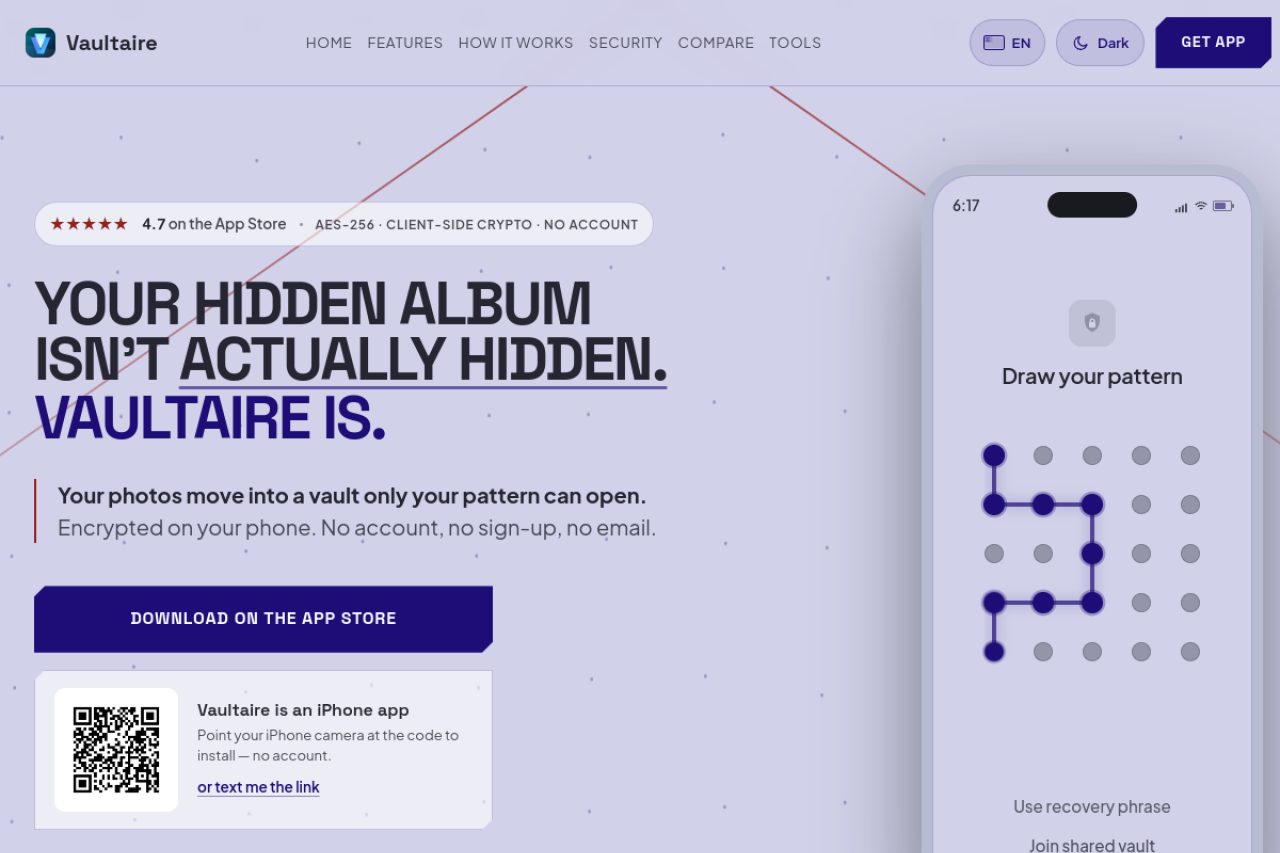
Vaultaire is an iPhone app for hiding photos, videos and files, encrypted on the device and opened by a pattern you draw. Rasty Turek built the first version in roughly three weeks and it reached $41,425 in gross App Store sales in August 2026.
What it is
Vaultaire is a private vault for the things you would rather not leave in a cloud photo library. Everything is encrypted on the device, there are no accounts to create, and drawing different patterns opens completely separate vaults — so a pattern held under pressure reveals nothing.
The unusual part is what is missing. There is essentially no backend. The product was designed on the assumption that your private data should not sit on somebody else's server, and that design decision also happens to remove almost the entire infrastructure bill.
How it makes money
In-app purchases: annual and monthly subscriptions plus a lifetime unlock, which turned out to be the most popular option. Reported figures show $26,384 in gross sales in July 2026 and $41,425 in August, on about 17,000 monthly downloads and a download-to-paid conversion rate of roughly seven and a half percent.
Recurring costs were about five dollars a month for hosting and roughly four hundred dollars a month for the AI coding tools used to build it. The founder had planned to give the app away for free and added a paywall at the last minute, mainly, he says, to discourage a flood of support requests.
Why it worked
The founder had spent years as an engineer at a large email company and later sold a copyright technology company, then used the gap afterwards to push AI coding agents as far as they would go. He had wanted to build this product for years but had no interest in learning the whole iOS ecosystem to do it; once agents could carry the parts he did not know, the barrier disappeared.
There was no market validation and no business plan — the app was built because he wanted it himself. That is a legitimate starting point when you are your own first user, but it is also a reminder that this particular outcome had a lot of accumulated engineering experience and financial runway underneath it. Copy the method, not the assumption that a three-week build is the whole story.
Estimates, not audited figures · Last updated: 2026-10-15
Related profiles
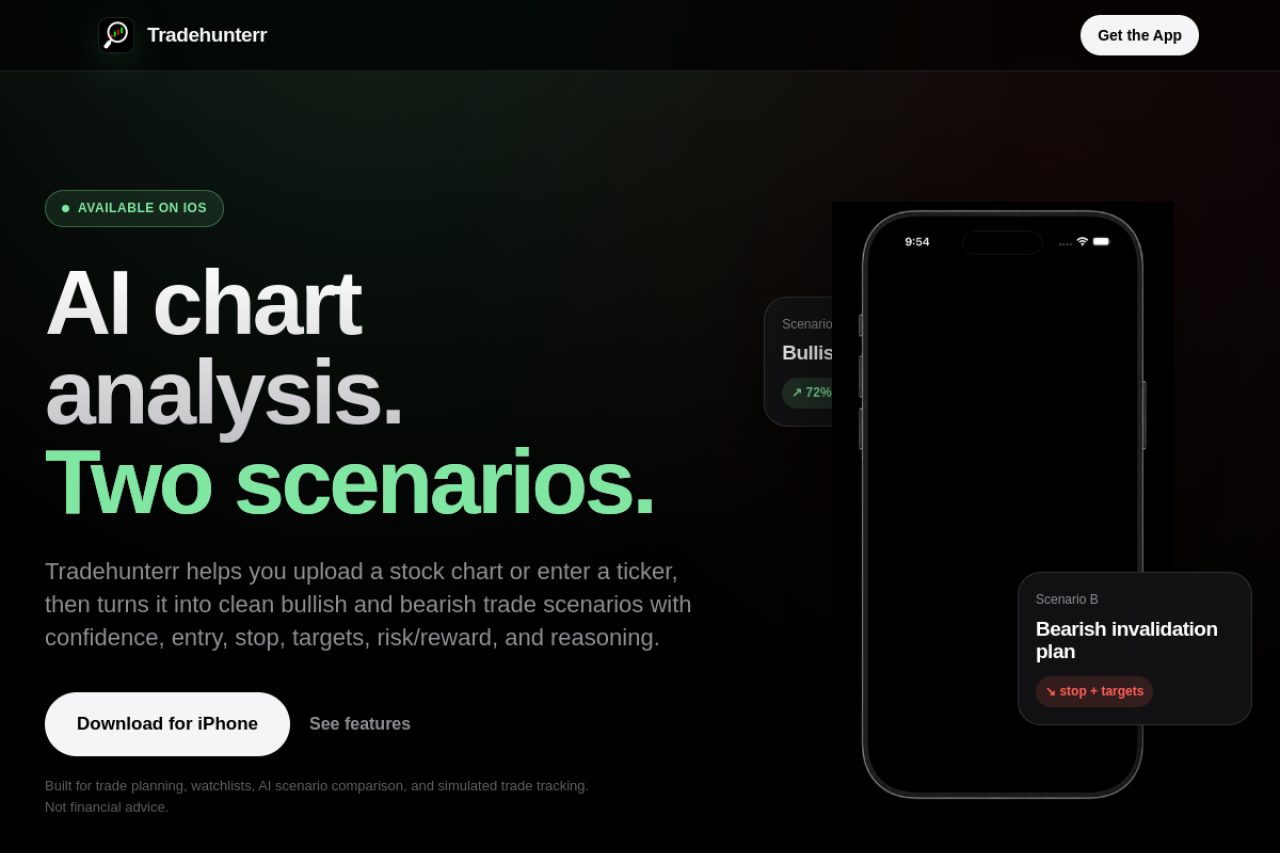
Trade Hunterr
The smallest revenue on this site, and one of the more useful case studies.
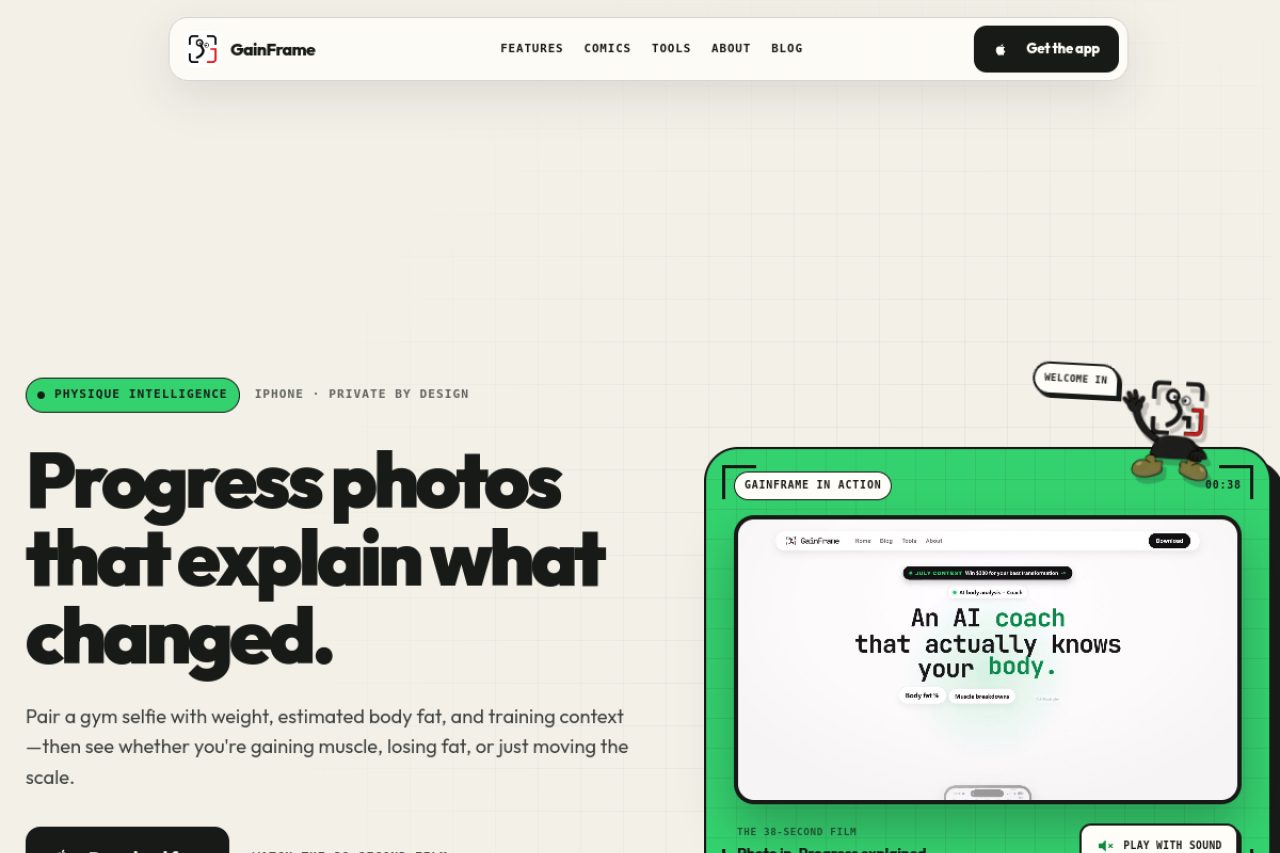
GainFrame
The honest version of a $1.2K side project — small revenue, real users, still running.

Pep AI
A new drug category created a new set of daily questions. He wrote them all down.
Keep exploring
110 profiles and counting — let fate pick the next one.
Frequently asked questions
What is Vaultaire?
A privacy-first iPhone app for hiding photos, videos and files, with on-device encryption, no accounts and separate vaults opened by different patterns.
How long did it take to build?
The initial version took about three weeks, built by one developer using AI coding agents.
What does it earn?
Reported gross App Store sales of $41,425 in August 2026, about five months after launch.